The disappointment of AI translations

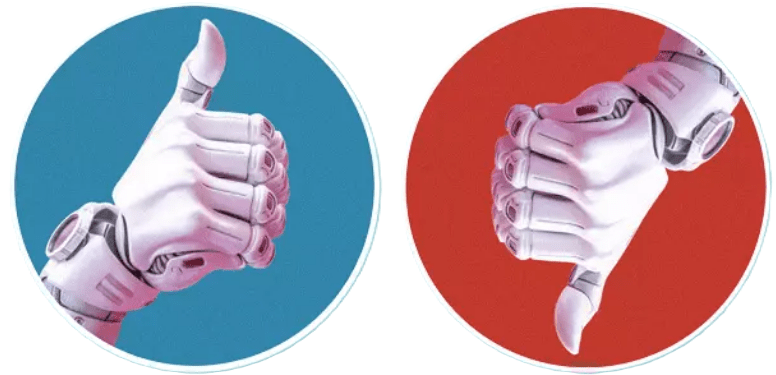
My most popular message to date on LinkedIn mentioned the problem of working on AI generated translations: it is very exhausting, and the main problem is that it takes more time than the managers seem to think.

I’m not the first translator who says that an AI generated target sentence often has to be rebuild from scratch. Not only because of mistakes, but primarily because the mistakes are spread in such an odd way in the sentence, that it costs more time to stick to correcting the mistakes in the sentence, than to translate from scratch.

If you take the AI translation as a base to work from, you have to read and reread the source and compare it again and again with the target, because the content of the original can be ordered completely different in the target. If the translator wouldn’t do that, the result could be difficult to read, and wouldn’t even sound as the target language. Hence the extra work.

It’s one of the major disappointments about AI translations. I think we’ve hit the limit of gain in time that automation can give us.

donderdag 2 april – vrijdag 10 april 2026

Still going strong for long-standing client

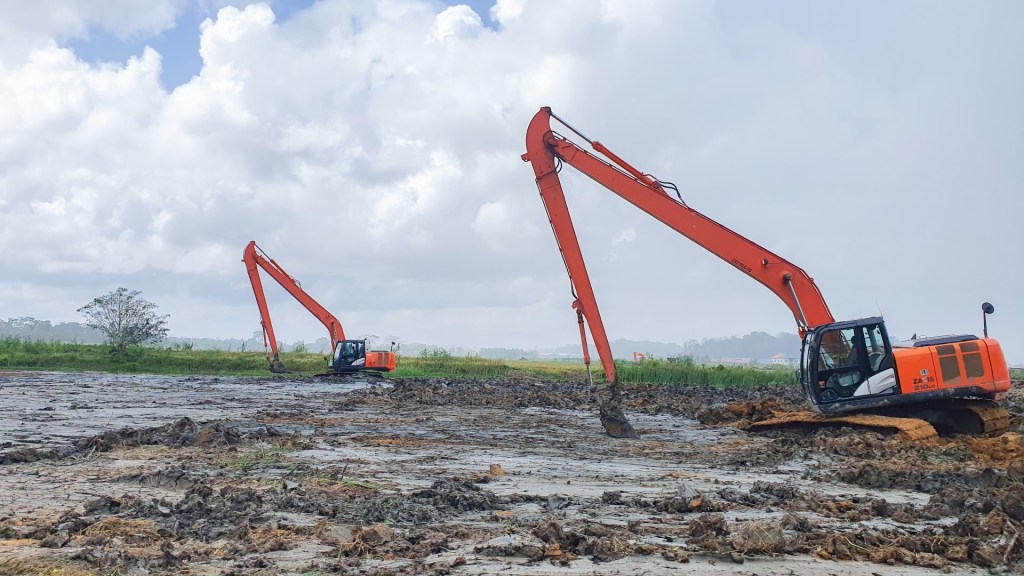
It is so long ago, that I barely remember when I started translating for them. ‘Them’ is a huge company manufacturing heavy building machinery, like excavators and tools such as tilt-rotators.
According to my archives it all began in 2009. In those days I translated off-line, although I had already been working on-line on tractor manuals.
The translation memories became more important, and the system used them more intelligently. Someday off-line changed to on-line for that company too. I helped them making the program a bit more clever, and nowadays we call it MPTE: machine translation – proof editing, the terminology we use in the translation industry for working with artificial intelligence.
The documents are safety instructions, user manuals, maintenance instructions, montage and demontage instructions, and so on.
Apart from the growing involvement of MPTE, there was also the increase of software used in the machines. Luckily I once was an apprentice Cobol programmer/analyst, and I had some interest in computers and programming. As a matter of fact, I build my own website around 2000, when blogs didn’t exist yet. Unfortunately that website is defunct nowadays. But my ICT background still helps a lot, especially because car technology without software has become unthinkable.
More than 15 years is indeed a longstanding client. That record won’t be broken easily.

building #machinery #excavator #tiltrotator #tractor #safety #instructions #manuals #maintenance #montage #demontage

Automated translations for automated mistakes: is it possible?

AI is everywhere.
The odd thing is it looks to me as if people just got recently aware of it although as a translator we have been using it for years.
The translation systems became gradually more clever. Because of that, there’s nothing new to it.
Unfortunately, what isn’t new either, is the simplistic views held by outsiders on automation.
Only yesterday I was in touch with somebody who thought it was possible to translate 400 pages for a mere 200 euro’s from English to Dutch. Did they really not see that 0.50 euro’s/page isn’t feasable for any system, however automated and advanced it is?
But the real problem is some believe you can do away with translators altogether.
Lately I found a website of one of my endclients, which obviously didn’t send all his texts via my agent to me, because there was a mistake on the home page, even in bold text. An adverb was treated as a noun. It’s a word, or rather a phrase, which is very tricky in Dutch because of the spelling differences for the two meanings.
I was flabbergasted and researched all the work I had already done for them, and didn’t find it in any file. It was clearly something they had done by using MT or AI. And, of course, the automated systems didn’t notice the differences.
I even noticed a second mistake, which also was the result of automated translation systems, in that case a problem by using a CAT tool. Although such systems can be very useful, they often hide differences which pop up because pieces of translations are glued together. But in changing the lingustic context by making new sentences putting together parts of old sentences or combining parts of old sentences with other words, those parts often have to be changed.
Worse is that it was on a website which promotes judicial actions, and I wonder how people are going to trust a company offering that kind of actions if you see mistakes on the home page. Cutting out the human in the loop causes mistakes by which you lose clients, revenue and support.

Changing words

Remember the days when the web was young and people in the Netherlands called a ‘website’ a ‘webstek’?

The word didn’t catch on, but others did, like ‘koekje’ for ‘cookie’, although it’s not very general.

And homepage… That’s an odd one. Often one just writes ‘home’, and in that case almost nobody prefers a Dutch version. ‘Thuispagina’, however, is used, Although a search on Dutch language sites with domain name .nl reveals more than a billion occurrences of the word ‘homepage’, I doubt the validity of those search results. The Netherlands have only approximately 17 million inhabitants. Those figures suggest 75 web pages per inhabitant. Now, that’s not entirely impossible, but it is astonishing.

In general it looks as if Dutch coinages for web terminology didn’t really catch on, but that doesn’t mean you should altogether avoid them when translating, because it’s a way for a company to build its brand and character.

Some words did catch on, like ‘afdrukken’ for ‘to print’.

So it’s not only a matter of looking in a dictionary or putting everything in the hands of some AI. Remember when InterNet was spelled? Which became Internet, and finally plain internet? One has to notice such stuff, and it’s not purely a matter of statistics.

Talk it through with your translator, or make sure you can trust him he chooses what suites your company, personality or target audience.

#translation #motte #TranslationAgency #localization

vrijdag 25 april 2025

Translation Agency Motte – 9

Future-Forward in Technical Translation

As industries continue to evolve and globalize, the need for accurate and culturally sensitive technical translation becomes increasingly critical. Translation Agency Motte, with its rich history and commitment to excellence, stands poised at the forefront of technical translation, ready to navigate the challenges of an ever-changing linguistic landscape. In a world where precision matters, Motte remains a reliable partner for businesses seeking to communicate their technical expertise on a global stage.

Translation Agency Motte – 8

Embracing Complexity with Expertise

The diverse range of technical texts that Translation Agency Motte handles requires more than linguistic proficiency—it demands a deep understanding of the industries involved. Motte’s commitment to excellence is evident in its ability to embrace the complexity of technical translation across automotive, IT, machinery, communication tools, software, tourism, and business sectors. By combining linguistic finesse with industry-specific knowledge, Motte ensures that its clients’ technical content is not only translated but also effectively communicated to a global audience.

Translation Agency Motte – 7

Business Texts: Versatility Unleashed

Translation Agency Motte’s versatility extends to various forms of business texts. Whether translating contracts, financial documents, marketing materials, or corporate communications, Motte’s linguistic experts understand the importance of conveying the intended message accurately while adhering to the specific terminology and style of each industry.

Translation Agency Motte – 6

Tourism: Inviting the World In

Translation plays a pivotal role in the global tourism industry. Motte’s proficiency in translating tourism-related content, including travel guides, brochures, and promotional materials, helps businesses and destinations connect with an international audience. By capturing the cultural nuances and travel-related information accurately, Motte contributes to the success of the tourism sector in bridging language gaps.

Translation Agency Motte – 5

Communication Tools and Software: Beyond Words

In an era dominated by digital communication, Translation Agency Motte excels in translating manuals for communication tools and software. From user interfaces and instructional guides to software documentation, Motte’s linguists combine language proficiency with an understanding of the user experience, ensuring that the translated content not only conveys technical details accurately but is also user-friendly.

Translation Agency Motte – 4

Machinery Manuals: Navigating Complexity

Manufacturers of machinery rely on precise and comprehensible manuals to ensure the proper operation of their equipment. Motte’s expertise in translating machinery manuals extends beyond linguistic accuracy to encompass a deep understanding of technical processes. Whether it’s heavy machinery, industrial equipment, or specialized tools, Motte’s translations facilitate clear communication in the technical realm.