AI Expo 2026

It will take a year or two before we finally grasp what AI really is capable of, and what not.

Nobody has to doubt that the current claims are exaggerated, but in the meantime we try to be as good informed as possible.

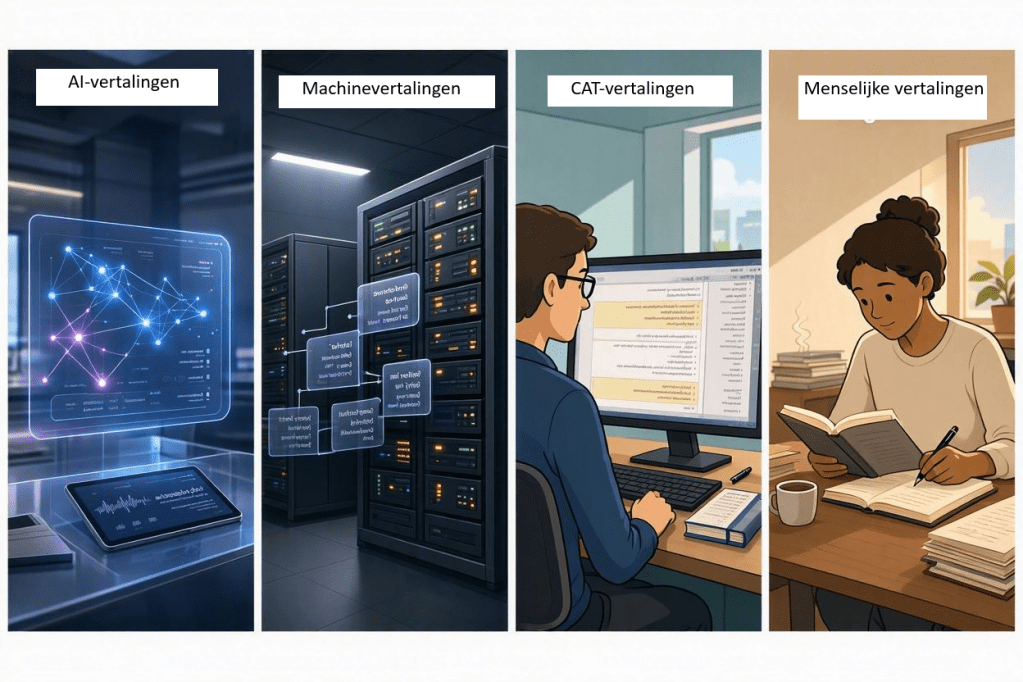
As I have written earlier, here and elsewhere, as a translator we all use AI in some form since some years. I don’t know when it exactly started. It’s difficult to pinpoint the moment, because it was a gradual evolution in the way our software became smarter in the way it combined terminology databases and previous translations.

The word ‘intelligent’ is not, however, the way I would describe it. The software, also the so-called Artificial Intelligence, gives sometimes unexpected results, but always shows a lack of intelligence, understanding and logic. It only does seem so superfluously.

During the AI Expo 2026, organized by Proz.com, some speakers gave some insightful talks showing how AI lacks in-depth knowledge and mastering of language and translation.

The disappointment of AI translations

My most popular message to date on LinkedIn mentioned the problem of working on AI generated translations: it is very exhausting, and the main problem is that it takes more time than the managers seem to think.

I’m not the first translator who says that an AI generated target sentence often has to be rebuild from scratch. Not only because of mistakes, but primarily because the mistakes are spread in such an odd way in the sentence, that it costs more time to stick to correcting the mistakes in the sentence, than to translate from scratch.

If you take the AI translation as a base to work from, you have to read and reread the source and compare it again and again with the target, because the content of the original can be ordered completely different in the target. If the translator wouldn’t do that, the result could be difficult to read, and wouldn’t even sound as the target language. Hence the extra work.

It’s one of the major disappointments about AI translations. I think we’ve hit the limit of gain in time that automation can give us.

donderdag 2 april – vrijdag 10 april 2026

Still going strong for long-standing client

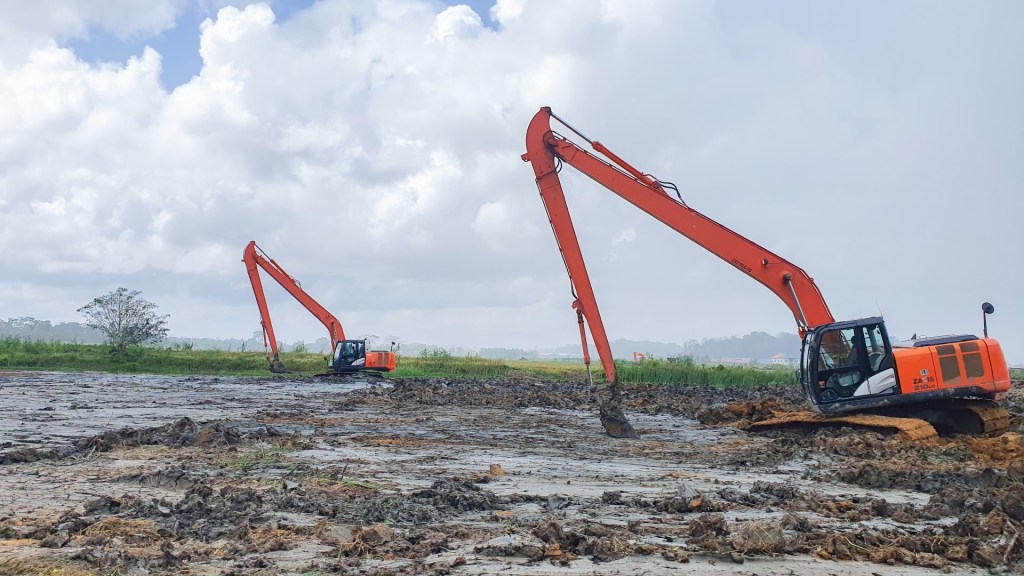
It is so long ago, that I barely remember when I started translating for them. ‘Them’ is a huge company manufacturing heavy building machinery, like excavators and tools such as tilt-rotators.
According to my archives it all began in 2009. In those days I translated off-line, although I had already been working on-line on tractor manuals.
The translation memories became more important, and the system used them more intelligently. Someday off-line changed to on-line for that company too. I helped them making the program a bit more clever, and nowadays we call it MPTE: machine translation – proof editing, the terminology we use in the translation industry for working with artificial intelligence.
The documents are safety instructions, user manuals, maintenance instructions, montage and demontage instructions, and so on.
Apart from the growing involvement of MPTE, there was also the increase of software used in the machines. Luckily I once was an apprentice Cobol programmer/analyst, and I had some interest in computers and programming. As a matter of fact, I build my own website around 2000, when blogs didn’t exist yet. Unfortunately that website is defunct nowadays. But my ICT background still helps a lot, especially because car technology without software has become unthinkable.
More than 15 years is indeed a longstanding client. That record won’t be broken easily.

building #machinery #excavator #tiltrotator #tractor #safety #instructions #manuals #maintenance #montage #demontage

Onverwacht vermoeiende MPTE

Maandag nam ik met plezier een MTPE-project aan voor een merk van luxe-auto’s.


Nu, dat is geen nieuws, ik neem opdrachten altijd met plezier aan.


Maar het bleek twee dagen behoorlijk doorwerken te zijn. Ik was een beetje verrast dat ik me na de eerste dag al tamelijk leeg voelde.


Zoals gewoonlijk met dit soort MTPE-opdrachten vraag je je af waarom het zo zwaar voelt, want er was niet veel te vertalen en de meeste woordenschatproblemen waren al aangepakt in de TB.


Ten eerste was het echter een enorme hoeveelheid woorden: meer dan 166 000! Gelukkig moest ik er zelf maar ongeveer 10 000 controleren.


Maar, hola: de AI had geen rekening gehouden met de TB! Dus zadelde de kwaliteitscontrole achteraf me nog met een hoop te controleren woordenschat op.


En een andere programma – misschien ook de AI – had alle woorden geschreven in hoofdletters vervangen door labels. Dat was interessant voor combinaties zoals “the STOP button”, maar het verving bijvoorbeeld ook “OFF” en “ON” in werkwoordgroepen (phrasal verbs) door labels.


Dat betekende dat “Tun ON” en “Turn OFF” er precies hetzelfde uitzagen. Het werd allemaal “Turn Label1” omdat de labels in elke afzonderlijke zin vanaf 1 werden genummerd.


Maar de vertaling “Zet Label1” zou dan “Zet OFF” of “Zet ON” worden, wat je niet echt Nederlands kunt noemen.


Elke vindplaats van een phrasal verb moest worden gecontroleerd in het document met de brontekst om zeker te zijn dat de vertaling in orde was.


Het zijn zulke zaken waardoor MTPE tijdroverender is dan verwacht, en de deadline halen je nogal wat kopzorgen kan bezorgen.


Maar, niet getreurd, het is gelukt. Het maakt echter wel duidelijk waarop MTPE soms onverwacht vermoeiend is.

Unexpectedly tiring MTPE

Monday I gladly excepted an MTPE project for a luxury car brand.


Well, I always gladly except a job, there’s nothing new to that.


But it turned out to be two days of hard work. I was a bit surprised that I felt a bit empty after the first day.


As usual with this kind of MTPE jobs you wonder why it does feel so hard, because there wasn’t a lot to translate and the vocabulary problems had mostly been taken care off.


However, first of all it was an anormous amount of words: more than 166 000! Luckily, I only had to take a look at approximately 10 000.


But, oh boy: the AI didn’t take the TB into account! All of that had to be checked afterwards.


And one or other program – maybe the AI too – replaced all words written in capitals by tags. That was very interesting for combinations like “the STOP button”, but it replaced “OFF” and “ON” from phrasal verbs by tags too.


That meant “Tun ON” and “Turn OFF” looked exactly the same. It all became “Turn TAG1”.


But the translation “Zet TAG1” would have ended up as “Zet OFF” or “Zet ON”, which can hardly be called Dutch.
Every occurrence of phrasal verbs had to be checked to be make it was translated OK. Things like that make MTPE more time-consuming than expected, and meeting the deadline can be a headache.


I pulled it off, but it became clear why MTPE can feel so unexpectedly tiring.

AI-modus van Google (4)

Ook deze vond ik eigenlijk wel grappig:

Peter Motte
(Geraardsbergen, 31 maart 1966) is een veelzijdige Belgische vertaler, auteur en publicist die vooral actief is in de werelden van sciencefiction, fantasy en strips.
Professionele Activiteiten

Vertaler & Ondernemer: Sinds 1997 runt hij Vertaalbureau Motte in Geraardsbergen, waarbij hij technisch vertaalwerk (automobiel, ICT) combineert met literair werk en vertalingen van bekende manga’s (o.a. Death Note, Bleach) voor uitgeverij Kana.
Literair Werk: Naast 13 jaar redactie van het tijdschrift De Tijdlijn, schreef hij poëziebundels en stelde hij de verhalenbundel Atlas (2013) samen.

Online Aanwezigheid
Peter Motte blogt over taal, literatuur en AI, en vermijdt sociale media.

“vermijdt sociale media”… Nou ja, eigenlijk is dat wel waar, maar het staat er wel nogal apodictisch.

AI-modus van Google (3)

Het begint grappig te worden: telkens als ik mezelf met de AI-modus van Google opzoek, krijg ik een ander resultaat.
Deze keer (aswoensdag 2026 – dat is een raadseltje) vond ik het tamelijk geslaagd, vooral omdat het de verschillende aspecten nauwkeuriger behandelde dan het tot nu toe deed.
Feit is dat ik niet weet waarom het nu beter is dan enige tijd geleden. Heeft iemand het bijgewerkt? Maar hoe dan? Of heeft het zich gebaseerd op de gegevens hier op de blog? En indien niet, waar heeft het dan extra gegevens gehaald? Of zien we het binnenkort weer afglijden?

Peter Motte
(Geraardsbergen, 31 maart 1966) is een veelzijdige Belgische vertaler, auteur en publicist. Hij is vooral actief binnen de domeinen van vertalingen, technologie en fantastische literatuur.

Professionele achtergrond
Sinds 1997 runt hij Vertaalbureau Motte, waar hij zich specialiseert in vertalingen van Engels, Frans en Duits naar het Nederlands. Hoewel hij vaak wordt geassocieerd met literair werk, ligt zijn professionele focus voornamelijk op technische vertalingen voor sectoren zoals de automobielindustrie, ICT en de toeristische sector.

Literair werk en publicaties
Motte is een bekende figuur in de wereld van de sciencefiction en fantasy in Vlaanderen:

Tijdschrift: Hij gaf 13 jaar lang het literaire tijdschrift De Tijdlijn uit, dat een platform bood voor fantastische verhalen.
Manga: Vanaf 2007 werkte hij mee aan de Nederlandse vertalingen en correcties van bekende mangareeksen zoals Death Note, Bleach en Black Butler voor uitgeverij Kana.
Auteur: Hij schreef diverse korte verhalen en poëzie, waaronder de haikubundels Ik ben geen boeddhist (2006) en Aan niemand opgedragen (2007).
Redacteur: In 2013 stelde hij de verhalenbundel Atlas samen, een collectie van fantasy-, horror- en sciencefictionverhalen.

Online aanwezigheid
Hij is een actieve blogger en deelt regelmatig zijn visie op de impact van AI op de vertaalwereld, taalnuances en literatuur via zijn eigen websites en platforms zoals Bloggen.be.