AI is a slotmachine

Based on experience my colleague Markéta Brožová Hanelová said: “As for interpreting, I don’t think this profession will be easily erased, but similarly to translation, the developments are not driven by the rising AI-translation quality, but rather by clients willing to take risks in exchange for huge savings.”

A recent example of errors by AI is “Ich have Erfahrung mit Didaktik und Sprachlernmaterialien”. “I have” was translated by “Ich have” instead of “Ich habe”.

Some people think the AI does that to mark it as an AI translation. But those markings use special combinations of successive synonyms, not mistakes.
It’s a mystery why it came up with “Ich have”.

A translation with a CAT tool or even with MT wouldn’t do that, because what you have entered correctly in CAT or MT will be reproduced correctly. AI is trained on an enormous amount of source material, and should not come up with “Ich have”. The volume of material would average out mistakes like that. Theoretically, that is.

You could argue that the blunder is easy to notice, but there are a few problems.

First of all, the types of mistakes AI makes are clearly unpredictable. It could be anything, and therefore it demands extra attention. Not only are there seemingly easy to notice problems, but you could also be tackled by mistakes in specialised vocabulary. And that’s tricky business.

Secondly, the user cannot trust AI if one of the two languages is unknown to him. You still have to be good in the source and the target language, because otherwise you’re going to miss errors. And on top of that, you also have to know the specialised vocabulary in both languages, which is especially treacherous because different terms might superficially be the same, whereas they aren’t in reality.

Basically all problems stem from the fact that AI does not reason, but gambles when it chooses words. It’s based on the most frequent occurrences of word combinations, not on the meaning, because it doesn’t understand things.

Positive reaction from a client

It are difficult times to find new clients, and the volume from older clients tends to diminish too.

Therefore I asked one of them whether I got the jobs during August because my colleagues were on a vacation, as I started to ask myself if I did something wrong, or whether the quality of my work went down.

The involved project manager answered:

“I can’t tell for other PMs, but for me personally, you are one of my first choices 😊 You reply quickly, consistently deliver good-quality translations, you’re flexible when it comes to deadlines, and your rate is competitive. So the recent jobs weren’t simply because other translators were on vacation – I’m very happy to work with you and will continue reaching out whenever I have suitable projects for you.

Best regards,

Barbara S.” (full name deleted for privacy reasons)

I translate for them from English to Dutch, and usually it’s about heavy mobile equipment.

Der römisch-katholische Papst Leo XIV. über KI

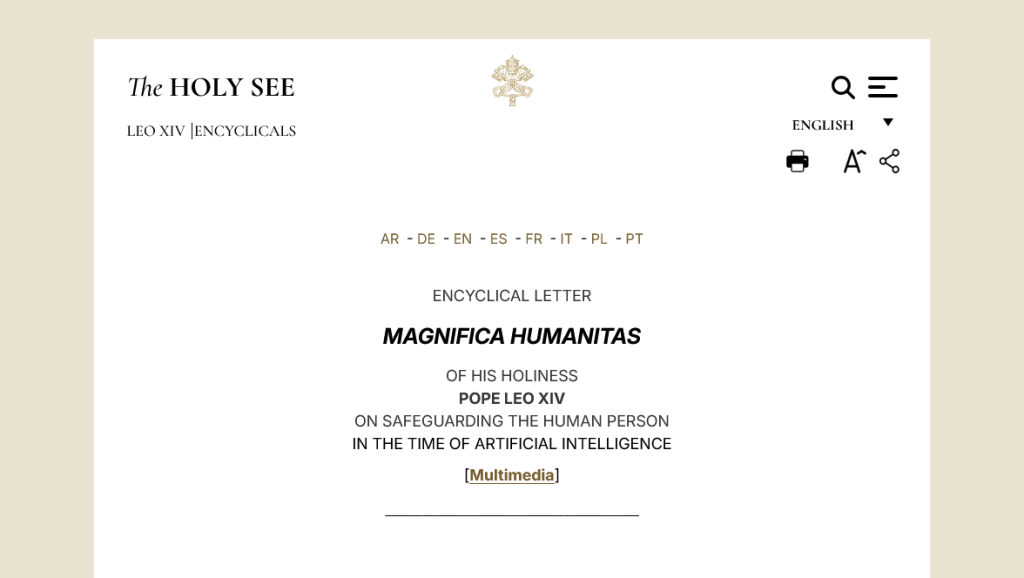
Kürzlich sorgte der römisch-katholische Papst Leo XIV. für einiges Aufsehen, weil seine erste Enzyklika sich mit KI beschäftigt.

Unabhängig davon, ob man für oder gegen den Papst ist, spielt das keine Rolle. Wenn jemand mit einer so hohen Stellung wie er Ideen zu einem bestimmten Thema entwickelt, kann es immer interessant sein zu wissen, was er darüber denkt.

Manche Menschen finden es merkwürdig, dass ein Papst über KI spricht, aber das ist es nicht. KI könnte enorme gesellschaftliche Auswirkungen haben, und Religion beschäftigt sich in hohem Maße mit sozialen Beziehungen. Daher ist es naheliegend, dass Leo XIV. es für wichtig hält, dass die römisch-katholische Kirche Ideen und Positionen dazu entwickelt.

Das einzig Merkwürdige an dieser Enzyklika ist, dass sie nicht auf Latein verfügbar ist, obwohl der Titel auf Latein lautet: Magnifica Humanitas. Derzeit existiert sie in acht Sprachversionen: Arabisch, Deutsch, Englisch, Spanisch, Französisch, Italienisch, Polnisch und Portugiesisch.

Hier sind die Links zu den Dokumenten: AR  – DE  – EN  – ES  – FR  – IT  – PL  – PT

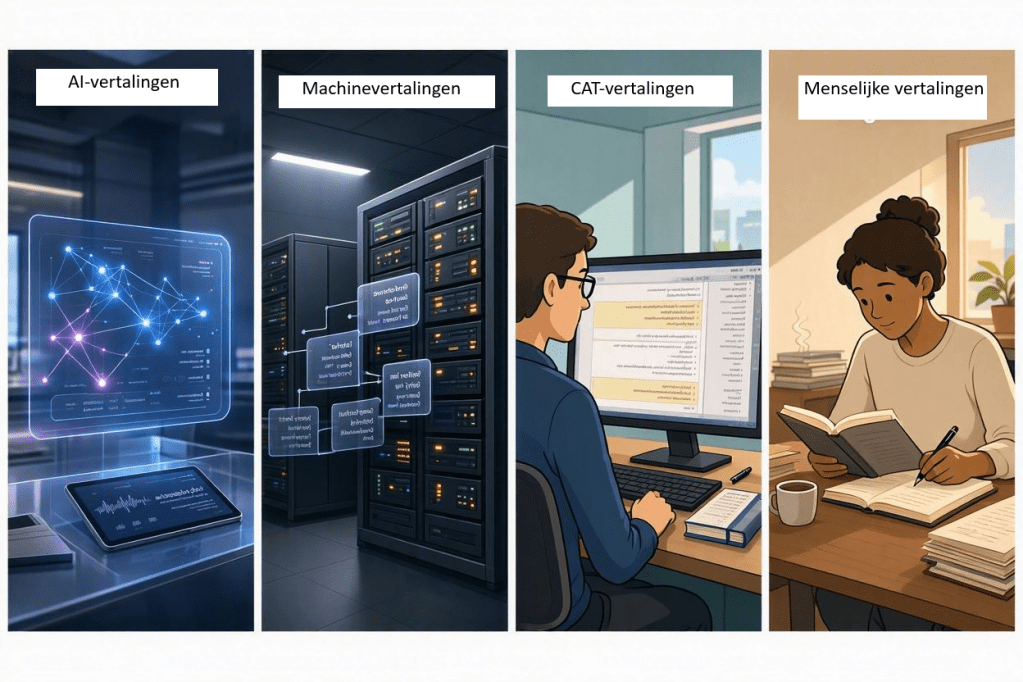
Menselijke vertalingen, CAT-vertalingen, machinevertalingen en AI-vertalingen

Ons uitgangspunt is altijd menselijke vertalingen in onze moedertaal, om te garanderen dat het merk van de klant ook in de streek van de doeltaal relevant blijft voor de doelgroep.


Ook vertalingen met CAT kunnen daarvoor worden ingezet, en regelmatige klanten kunnen we daarmee tijdwinst geven die niet geëvenaard wordt door MT- en AI-vertalingen. Bovendien laten AI-vertalingen vaak op subtiele wijze te wensen over, waardoor ze geen tijdwinst opleveren, zelfs in vergelijking met CAT- en MT. Er moet immers altijd worden gecontroleerd, geverifieerd en gecorrigeerd.


Er moet zeker rekening mee worden gehouden dat vertalingen doorgaans vertrouwelijk materiaal bevatten, zoals contracten, productgegevens en informatie over leveranciers- en klantenrelaties. Het is daardoor onverstandig die aan AI toe te wijzen. Dat ontsnapt gemakkelijk aan de controle.


Toch voeren we soms ook proeflezen uit van AI-vertalingen die door de klant worden geleverd. Het risico voor lekken door het gebruik van AI berust dan bij de klant, en hij is beter geplaatst dan wij om te besluiten welke gegevens vertrouwelijk zijn en welke niet.


Het is dus niet zo dat we categoriek afwijzen om aan AI-resultaten te werken, al weten we uit ervaring dat AI in het totaalproces van het vertalen geen meerwaarde oplevert, niet wat betreft tijdwinst, en niet wat betreft kwaliteit.

#vertalen #vertalingen #ai #cat #mt #machinevertalingen