Three source languages is overdone. Or is it?

To lots of people it sounds overdone: “Three source languages: German, English and French”.
Wouldn’t it be better to stick to one?
But combined with Dutch the picture changes.
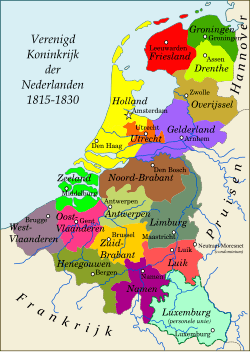
Lots of companies use internally more than one language, and as the Netherlands are surrounded by regions in which those three languages play an important role, their companies also tend to use two to three of those languages.
That’s why those three source languages are ideally suited to help out businesses, because their documents often need all of those languages, and not only one.
Therefore have German, English and French as source languages gives my services an ideal position to help out companies, whether it’s for their internal documents or for their costumer oriented documents, in Belgium and in the Netherlands.
Automated translations for automated mistakes: is it possible?

AI is everywhere.
The odd thing is it looks to me as if people just got recently aware of it although as a translator we have been using it for years.
The translation systems became gradually more clever. Because of that, there’s nothing new to it.
Unfortunately, what isn’t new either, is the simplistic views held by outsiders on automation.
Only yesterday I was in touch with somebody who thought it was possible to translate 400 pages for a mere 200 euro’s from English to Dutch. Did they really not see that 0.50 euro’s/page isn’t feasable for any system, however automated and advanced it is?
But the real problem is some believe you can do away with translators altogether.
Lately I found a website of one of my endclients, which obviously didn’t send all his texts via my agent to me, because there was a mistake on the home page, even in bold text. An adverb was treated as a noun. It’s a word, or rather a phrase, which is very tricky in Dutch because of the spelling differences for the two meanings.
I was flabbergasted and researched all the work I had already done for them, and didn’t find it in any file. It was clearly something they had done by using MT or AI. And, of course, the automated systems didn’t notice the differences.
I even noticed a second mistake, which also was the result of automated translation systems, in that case a problem by using a CAT tool. Although such systems can be very useful, they often hide differences which pop up because pieces of translations are glued together. But in changing the lingustic context by making new sentences putting together parts of old sentences or combining parts of old sentences with other words, those parts often have to be changed.
Worse is that it was on a website which promotes judicial actions, and I wonder how people are going to trust a company offering that kind of actions if you see mistakes on the home page. Cutting out the human in the loop causes mistakes by which you lose clients, revenue and support.

The difficulties of technical translations

Today a colleague wrote on a translators’ chat list:

“Technical manuals have always been a notorious field of terrible translation work, so it seems a little naive to think quality is of the utmost importance.”

My colleague could be right about that “notorious field of terrible translation work”, but I’m afraid he looks a bit too much at technical translations from the point of view of a literary translator.

Technical translations can be difficult for various reasons.

The following sentence is an example from a manual for a forklift I’m working on at the moment:

“This bug causes problems when scanning operator cards, resulting in misread card strings.”

“String” in this sense should be “tekenreeks” in Dutch. That would be the correct translation.

However, in IT they usually do not translate “string”, but leave it as it is.

Why? Because the IT people don’t know any better, that’s why. And that is because even the Dutch use English texts a lot.

That means that if I translate “card string” by “kaarttekenreeks”, they’ll reject the translation.

Moreover: the legacy translations have “string” a few times, always left untranslated.

The only thing I can do is keep “string” and consider it as “technical language”.

It’s not a matter of “terrible translation work”, it’s that as a translator you don’t have much choice.

I have an IT dictionary with translations for lots of IT words, but the clients never accept them. As a matter of fact, in my early days I lost a client when I applied it.

Fun with slogans for translators and translation agencies

Translation Agency Motte provides translations, not copywriting. But sometimes the marketing nature of the source text demands a certain degree of copywriting. So it shouldn’t be entirely untreaded ground for us.
Therefore we amused ourselves a bit with making up slogans for translation agencies and translators.

“Bringing language barriers to their knees”
“Translating language, connecting cultures.”
“Translating words, connecting worlds.”
“Translating the world, one word at a time.”
“Bridge the language gap, connect the world.”
“Bridging the language gap, one word at a time.”
“Breaking barriers, building connections”
“Connecting languages, connecting worlds”
“Bringing worlds together, one word at a time.”
“Translate with confidence, communicate without boundaries.”
“Connecting languages, connecting cultures”

“Bridge the language barrier with ease.”
“Translate with confidence, communicate without boundaries.”
Translate with ease, bridge the language divide.”

“Make connections, expand your world”
“Making connections, breaking language barriers”

“Translate with confidence, communicate without boundaries.”
“Connecting languages, connecting cultures”