Why I don’t understand the hype about translation with AI

Artificial Intelligence (AI) in translation is nothing new.

The craft of translation has always been influence by ICT, because it’s all about communication. We were amongst the first who could use fax machines. We were amongst the first who could use pc’s, even if it was only to have an output which looked more neat. And so we were also the first who used pc’s to install databases on them and to be able to use automated dictionaries and spelling checkers.

One of the first benefits I like about translating using a computer, was that we could preserve the layout of the original document. The days of numbering blocks of text to make clear which part of the translation was related to which part of the original text, were gone. The client finally got a document which he could incorporate in his work flow and product chain without much ado.

When computer memories became big and fast enough to store source and target of previous translations, we could start reaping the benefits of our previous work, by automating what we had already been done for decades: found translations of reviewed documents on the translations of the original documents. But this time we didn’t have to plough through huge stacks of material and type it over. The computer did part of the work for us, and we could deliver faster a better result.

That last evolution was the introduction of computer aided translation, or CAT. Once those programs were used, it was simply a matter of time before we could implement logic to compare source material with target material of various kinds, so that the program could support us to amend the target.

Inevitable that lend to an increasing intelligence of the programs, and finally to what we call machine translation, or MT.

That’s why I don’t understand the hype about translating with AI. As a matter of fact MT IS translating with AI. MT systems often don’t use the traditional CAT tools as their fundamental work system, and traditional CAT tools have implemented some MT elements to make it possible to use MT to prepare for the definitive work by the translation to speed up the work and at the same time to avoid mistakes by the automated systems.

MT doesn’t work without MTPE: machine translation post editing.  The translator does the post editing of the texts produced by MT. That is the way translation with AI works. The only difference I see between translation with AI and MTPE is the terminology: it are two different expressions to mention the same thing. Therefore the huge hype about AI in the field of translation is nothing more than a shift in providers: some say they use AI to draw clients, but they’re doing the same thing that the translation business has been doing for several years now. AI in translation is more about marketing and window dressing than about offering a new, more advanced way of working.

Wannsee

Wannsee

Wannsee.

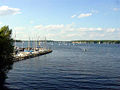
Het zal veel mensen onbekend zijn. Het is een meer in het zuidwesten van Berlijn, een zijarm van de rivier de Havel.

120px-wannsee

Hedendaagse foto’s tonen een toeristische plek geliefd bij watersporters. Het vakantiepotentieel leidde er waarschijnlijk in 1914 al toe dat de zakenman Ernst Marlier er een villa liet bouwen, nu bekend als de Villa Marlier.

260px-haus_der_wannsee-konferenz_02-2014

Het is een indrukwekkend gebouw, dat door de term “villa” wat tekort wordt gedaan, maar niettemin zou het geen ingangen in algemene encyclopediën hebben gekregen als daar geen grondige reden voor zou zijn.

Die reden is de zogenaamde Wannseeconferentie. Die vond plaats op 20 januari 1942. Het was een bijeenkomst georganiseerd door nazileider Reinhard Heydrich van hoge naziambtenaren. Zij kwamen bijeen om te spreken over een ‘definitieve oplossing’ voor het ‘Jodenvraagstuk’ (Endlösung der Judenfrage). De bijeenkomst begon om 12.00 uur en duurde minder dan twee uur.

De Villa Marlier is tegenwoordig een gedenkplaats-museum.

Het is een van die vele episodes tijdens de Tweede Wereldoorlog die – ondanks hun belang – niet aan het licht “hadden mogen komen”: van de oorspronkelijk 30 exemplaren van de notulen bleef er maar één over. De andere waren vernietigd.

Gelukkig dook in 1947 het laatste exemplaar op. In maart 1947 ontving Robert Kempner,[7] hoofdaanklager in het Wilhelmstraßenproces, een verzameling dossiers van het ministerie van Buitenlandse Zaken uit de periode van Joachim von Ribbentrop. Die dossiers waren in het Duits en moesten naar het Engels worden vertaald. Onder de stukken bevond zich een exemplaar van de strikt geheime notulen van de Wannseeconferentie. Deze notulen, en de vertaling ervan, waren de eerste berichten over deze bijeenkomst die naar buiten kwamen.

Op basis daarvan schreef en tekende Fabrice Le Hénanff het scenario van het stripverhaal Wannsee, waarin hij de episode beschrijft. We zien erin de bijeenkomst, en volgende de vergaderingen. Vanzelfsprekend is die niet precies bekend, o.a. doordat documenten erover werden vernietigd. Le Hénanff moest dus wel het een en ander verzinnen om van een droog, historisch gegeven waarvan het resultaat bekend is, een verhaal te maken. Beseffende dat het boek niet de werkelijkheid kon weergeven – tenzij misschien symbolisch zoals “wie es eigentlich gewesen ist” – werd er een inleiding toegevoegd om de historische nauwkeurigheid te bepalen, zodat de lezer niet in het diepe wordt gegooid en misschien een detail als een feit beschouwd.

Gelukkig voor ons werd die inleiding ook vertaald, net als de uitleiding waarin de carrière van de deelnemers aan de conferentie wordt samengevat.

Dit stripverhaal werd daardoor een van de beste bijdragen voor wie meer wil weten over de Tweede Wereldoorlog en de jodenvervolging.

Wannsee, Fabrice Le Hénaff, 2018, Casterman, stripverhaal, geïllustreerd in kleur, harde kaft, 88 p’s, isbn 9789030373544, prijs bij verschijnen 19.95 euro